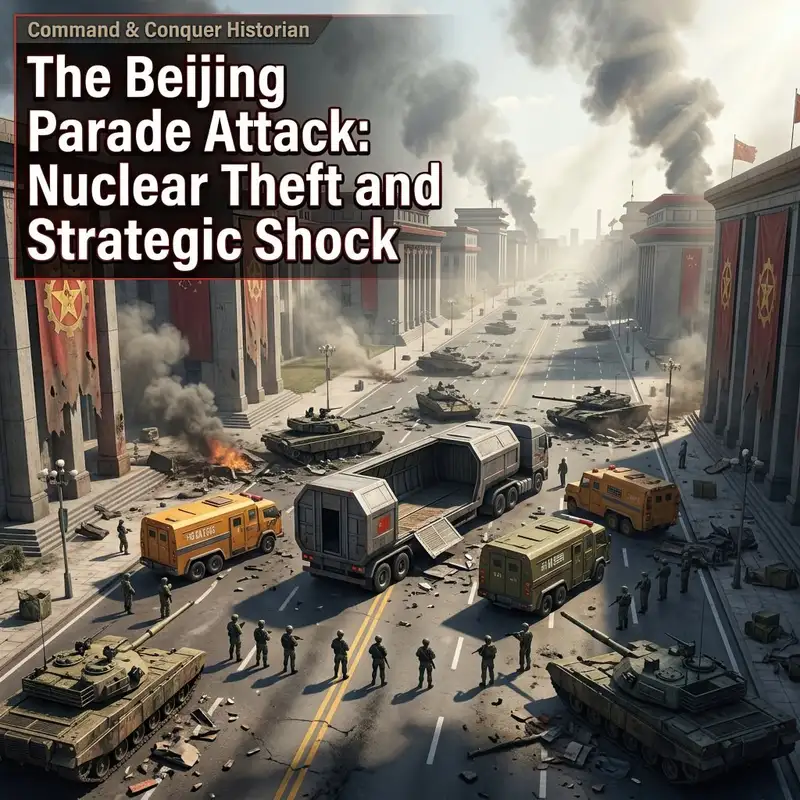
The Beijing Parade Attack: Nuclear Theft and Strategic Shock
The strategic value of studying The Beijing Parade Attack comes from the way it reshapes choices inside the Generals universe, where the United States, China, and the Global Liberation Army fight a decentralized global conflict. The episode focuses on weapons of mass destruction…
The strategic value of studying The Beijing Parade Attack comes from the way it reshapes choices inside the Generals universe, where the United States, China, and the Global Liberation Army fight a decentralized global conflict. The episode focuses on weapons of mass destruction, escalation, deterrence, and the challenge of preventing strategic weapons from becoming routine instruments of war, showing why the subject matters beyond the immediate battle or character. These weapons alter more than casualty levels because they change political thresholds, coalition behavior, and the urgency of counterforce operations. The episode stays within the supplied timeline and avoids unsupported continuity claims. Across the season, the larger question is how conventional military power interacts with insurgency, infrastructure attacks, special operations, weapons proliferation, and shifting international leadership. That perspective keeps the emphasis on military consequences while showing why Command & Conquer’s wars are shaped as much by systems and institutions as by individual battles. Visit ImaginedBattlefield.com for more military and science fiction.