The Assault on Moscow and the Fall of Stalin
Viewed as military history, The Assault on Moscow and the Fall of Stalin belongs to the Red Alert universe, where time travel repeatedly rewrites twentieth-century history and creates new coalitions, enemies, and technologies, a setting where technology and institutions evolve t…
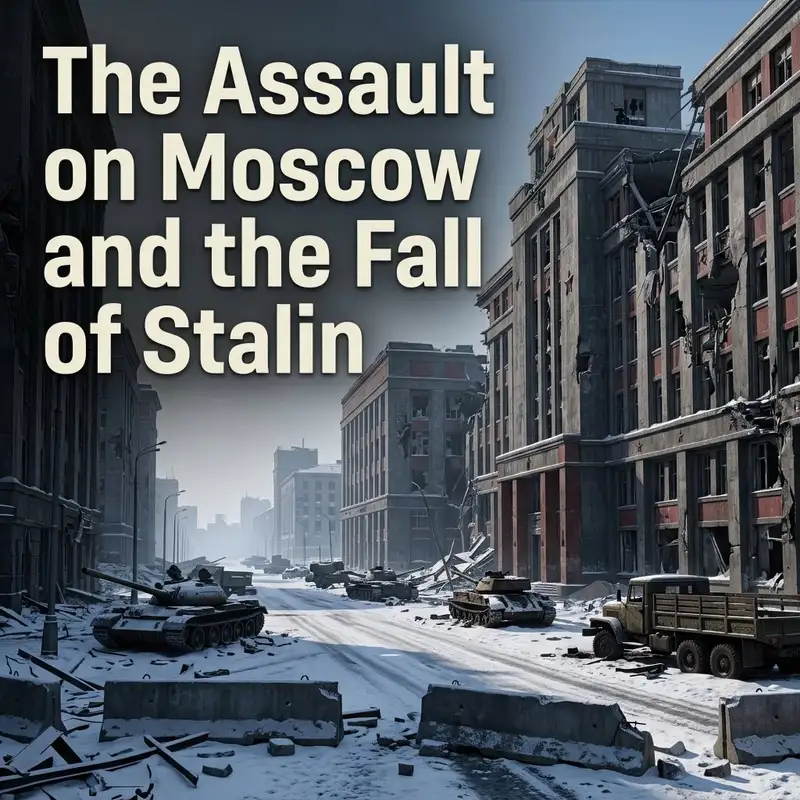
Viewed as military history, The Assault on Moscow and the Fall of Stalin belongs to the Red Alert universe, where time travel repeatedly rewrites twentieth-century history and creates new coalitions, enemies, and technologies, a setting where technology and institutions evolve together. The episode focuses on leadership, personal power, ideology, and the ability of individual figures to redirect entire military institutions, showing why the subject matters beyond the immediate battle or character. The strategic question is not simply what the leader wants, but how personality and political control shape the choices available to armies, governments, and followers. The discussion stays within the named timeline and supplied chronology, preserving the distinctions among incompatible campaigns and endings. The surrounding chronology ultimately returns to how alternate history changes strategic assumptions while industrial mobilization, superweapons, covert action, and competing timelines keep producing new wars. The broader lesson is that battlefield superiority remains temporary when the enemy can change technology, alliances, or the strategic environment. Visit ImaginedBattlefield.com for more military and science fiction.