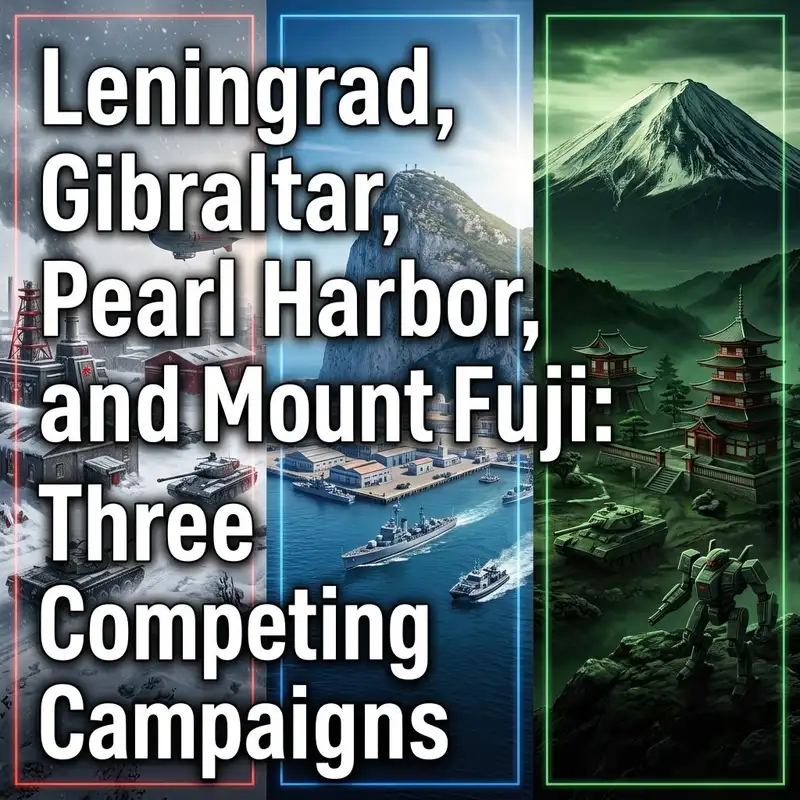
Leningrad, Gibraltar, Pearl Harbor, and Mount Fuji: Three Competing Campaigns
The strategic value of studying Leningrad, Gibraltar, Pearl Harbor, and Mount Fuji comes from the way it reshapes choices inside the Red Alert universe, where time travel repeatedly rewrites twentieth-century history and creates new coalitions, enemies, and technologies. At the…
The strategic value of studying Leningrad, Gibraltar, Pearl Harbor, and Mount Fuji comes from the way it reshapes choices inside the Red Alert universe, where time travel repeatedly rewrites twentieth-century history and creates new coalitions, enemies, and technologies. At the center is operational planning, force concentration, initiative, escalation, and the relationship between battlefield objectives and the wider campaign, linking tactical choices to the larger ability of a faction to continue the war. The episode emphasizes why the engagement happens, what each side is trying to accomplish, and how the outcome changes the next phase of the war. The discussion stays within the named timeline and supplied chronology, preserving the distinctions among incompatible campaigns and endings. The surrounding chronology ultimately returns to how alternate history changes strategic assumptions while industrial mobilization, superweapons, covert action, and competing timelines keep producing new wars. The episode therefore treats victory as conditional, measured by whether a faction preserves enough capability and freedom to shape what happens next. Visit ImaginedBattlefield.com for more military and science fiction.