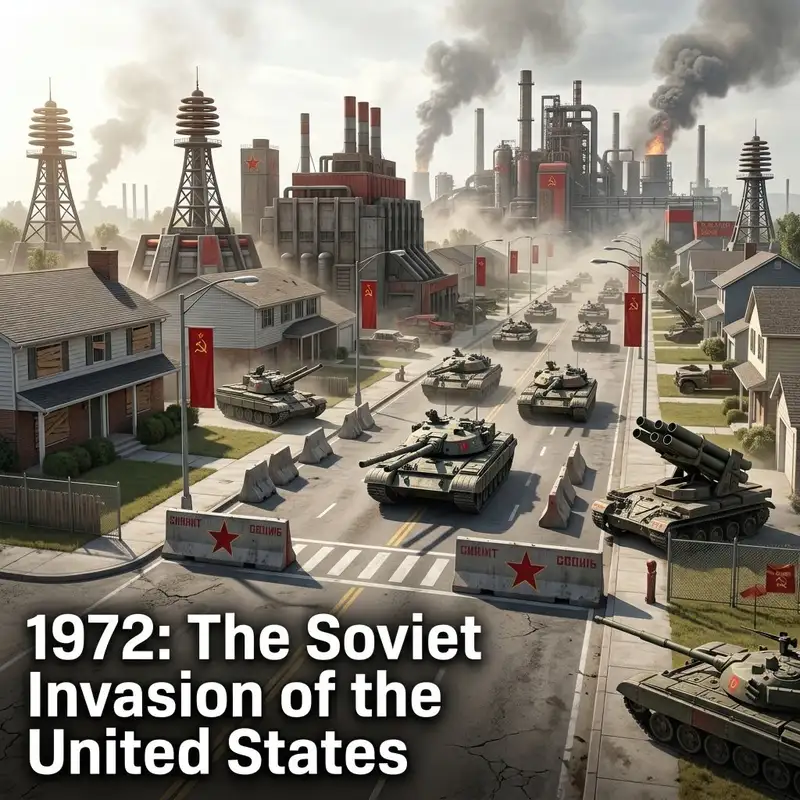
1972: The Soviet Invasion of the United States
The importance of 1972 comes from its place in the Red Alert universe, where time travel repeatedly rewrites twentieth-century history and creates new coalitions, enemies, and technologies, where local victories can have global consequences. At the center is political organizati…
The importance of 1972 comes from its place in the Red Alert universe, where time travel repeatedly rewrites twentieth-century history and creates new coalitions, enemies, and technologies, where local victories can have global consequences. At the center is political organization, ideology, command structure, legitimacy, and the military institutions that translate strategy into force, linking tactical choices to the larger ability of a faction to continue the war. The faction’s weapons matter, but its real military character comes from how it organizes people, territory, information, and authority. The description follows the supplied ordering and terminology while avoiding unsupported attempts to reconcile branches that the games leave separate. Placed in sequence, the topic advances the season’s concern with how alternate history changes strategic assumptions while industrial mobilization, superweapons, covert action, and competing timelines keep producing new wars. The episode therefore treats victory as conditional, measured by whether a faction preserves enough capability and freedom to shape what happens next. Visit ImaginedBattlefield.com for more military and science fiction.